2026 How to Choose the Best All Terrain Tires for Your Vehicle?
Choosing the right all terrain tires is crucial for vehicle performance. Renowned tire expert, Mark Thompson, once stated, "The right tires can transform your vehicle's experience." All terrain tires offer versatility, allowing drivers to navigate various terrains with confidence.
Selecting all terrain tires involves considering several key factors. Tread patterns, rubber compounds, and tire sizes play significant roles in performance. For instance, a deeper tread provides better traction in off-road conditions. It's essential to balance these aspects to fit your driving style and needs.
Understanding your vehicle's specifications is equally important. Some trucks thrive with aggressive tires, while others require a more subtle approach. Choosing the right all terrain tires can improve safety and comfort. However, it can be challenging to find the perfect match. Many drivers face confusion over options available. Taking time to research can lead to better decisions and enhanced driving experiences.
Understanding All Terrain Tires: What You Need to Know
Choosing the right all-terrain tires involves understanding their features and capabilities. All-terrain tires are designed for versatility. They perform well on various surfaces, from mud to gravel. This adaptability enhances safety and performance in unpredictable driving situations.
Consider the tread design. Aggressive patterns optimize traction on loose surfaces. Some tires have a stiffer sidewall, adding durability for rough terrains. This can be essential for off-road excursions. However, a sturdier tire may sacrifice comfort on highways.
Another aspect is the tire's load rating. It's crucial to match the tire to your vehicle's specifications. Overloading tires can cause premature wear and reduce safety. Pay attention to reviews and expert recommendations. They can provide insights into real-world performance. Making an informed decision can lead to a safer, more enjoyable driving experience.
Key Factors to Consider When Choosing All Terrain Tires
When selecting all-terrain tires, several key factors demand attention. One major consideration is tread design. A well-constructed tread pattern enhances grip on diverse surfaces, from mud to gravel. Industry reports suggest that tread depth should be at least 12-16 mm for optimal all-terrain performance. Shallow treads may compromise traction in off-road situations.
Another crucial aspect is tire construction. The material and structure of the tire influence durability and performance. Tires made with reinforced sidewalls provide better protection against punctures. A recent study revealed that 35% of all-terrain tire failures result from sidewall damage. This highlights the necessity of choosing robust options that can withstand challenging conditions.
Additionally, sizing plays a pivotal role. It’s essential to match tire dimensions with the vehicle's specifications. Mismatched sizes may lead to handling issues and safety concerns. Many drivers overlook this detail, which can affect overall performance. Regular checks for wear and air pressure are equally important; 75% of tire-related accidents stem from improper maintenance. Selecting the right all-terrain tires requires careful consideration of these factors to ensure both safety and capability on various terrains.
Performance Comparison of All Terrain Tires
This chart illustrates the performance ratings of key factors to consider when choosing all terrain tires for your vehicle. The ratings are based on a scale of 0 to 100, reflecting aspects such as traction, durability, noise level, wet performance, and off-road capability.
Comparing Tire Types: All Terrain vs. Other Tire Options
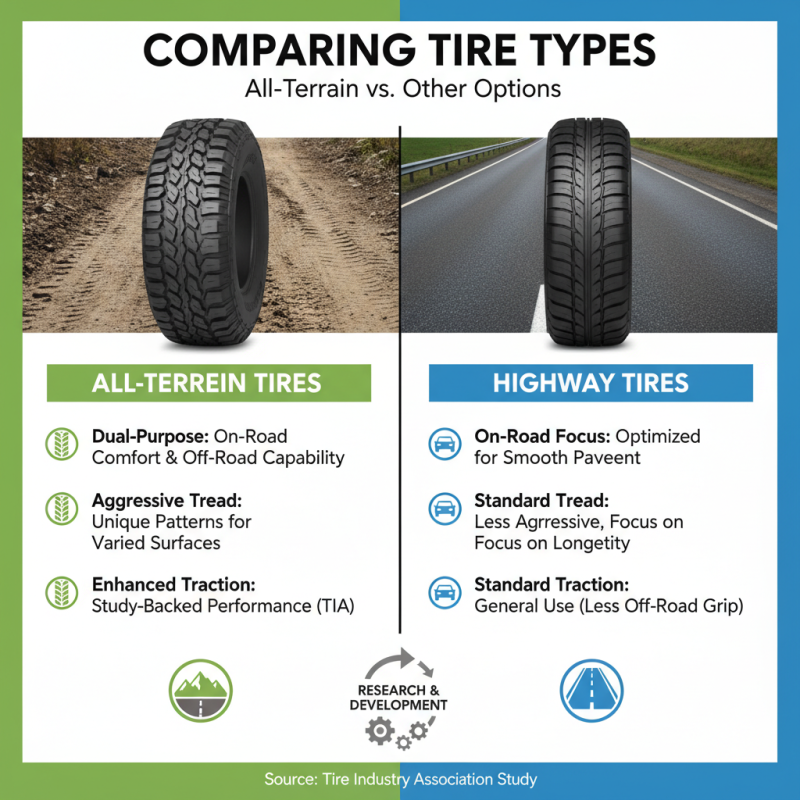
When considering the best all-terrain tires, it's crucial to compare them with other tire types. All-terrain tires offer a blend of on-road comfort and off-road capability. They feature unique tread patterns and compounds derived from extensive research. A study by the Tire Industry Association indicates that all-terrain tires generally exhibit improved traction on various surfaces compared to standard highway options.
Mud terrain tires, for example, prioritize off-road performance. They offer deeper treads but may sacrifice ride comfort on highways. In contrast, street tires excel in smooth driving but lack grip on uneven surfaces. According to Consumer Reports, all-terrain tires provide a balanced performance, making them suitable for diverse driving conditions. However, they can wear out faster on pavement due to their softer rubber compounds.
Selecting the right tire type can be complex. Every tire category has its pros and cons. It’s vital to assess your driving habits and needs. For instance, if your commute involves frequent gravel roads, all-terrain tires might be beneficial. However, for city driving, they might not be the best choice. Reflect on your priorities. A tire's lifespan and performance will significantly influence your overall experience. Balancing comfort and ruggedness is key.
Evaluating Tread Patterns for Optimal Performance
When choosing all-terrain tires, tread patterns play a crucial role in performance. The right tread can significantly impact your vehicle's traction, handling, and durability. According to the Tire and Rim Association, varied tread depths and shapes can enhance grip on mud and loose gravel. A study by the Rubber Association of Canada indicates that tires with deeper, more aggressive treads outperform those with flatter patterns in off-road conditions.
Different tread designs respond uniquely to various terrains. For example, tires with wide grooves excel in wet conditions by channeling water away. Conversely, tightly spaced treads offer better control on rocky surfaces. However, it’s essential to weigh these benefits against the potential for increased road noise and reduced fuel efficiency. Not all tread patterns are suitable for every environment, and selecting the wrong one could lead to suboptimal performance.
Tread wear is another key factor to consider. Regular maintenance, including checking tire pressure and alignment, can help extend the life of tires. A report by the American Automobile Association highlights that neglected tread maintenance can decrease traction by up to 30%. Always analyze your driving habits and local conditions before making a decision. The right tread pattern can enhance performance, but poor choices can lead to shortcomings.
2026 How to Choose the Best All Terrain Tires for Your Vehicle? - Evaluating Tread Patterns for Optimal Performance
| Tread Pattern |
Terrain Performance |
Noise Level |
Wear Resistance |
Price Range |
| Symmetrical Tread |
Good for light off-road |
Low |
Moderate |
$100 - $150 |
| Mud Terrain |
Excellent for muddy and soft terrain |
High |
Low |
$150 - $250 |
| All-Terrain |
Versatile for all conditions |
Moderate |
High |
$120 - $200 |
| Rock Terrain |
Ideal for rocky surfaces |
Low |
Very High |
$200 - $300 |
Maintaining All Terrain Tires for Longevity and Safety
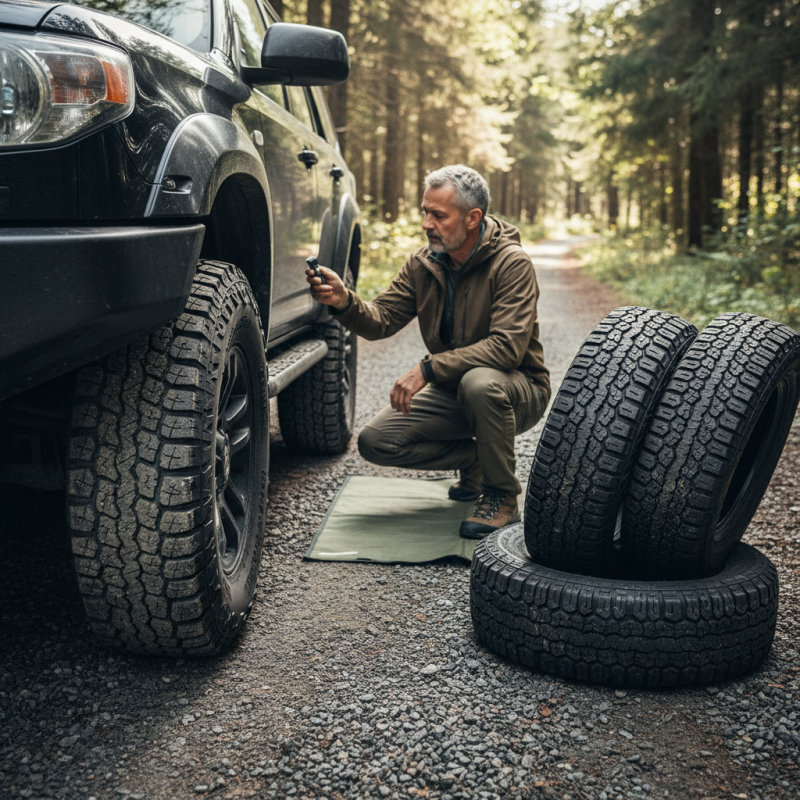
Maintaining all-terrain tires is crucial for both longevity and safety. According to the Rubber Manufacturers Association, proper tire care can extend tire life by 25%. Regular inspection is a key component. Look for signs of wear, such as uneven tread or bulges. These issues can lead to blowouts or reduced traction, especially in tricky conditions.
Tire pressure also plays a vital role. Maintaining the recommended PSI enhances performance. An under-inflated tire can increase rolling resistance, leading to higher fuel consumption. Conversely, over-inflation can reduce contact with the road, impairing handling. The U.S. Department of Transportation suggests checking tire pressure at least once a month.
Additionally, regular rotation is essential. Tires wear unevenly depending on their position on the vehicle. Rotating them every 5,000 to 7,500 miles can ensure uniform wear and improve grip. Neglecting this can result in premature tire replacement. The National Highway Traffic Safety Administration highlights that proper maintenance reduces the risk of accidents linked to tire failure.