How to Choose the Best All Terrain Tires for Your Vehicle?
Choosing the right all terrain tires for your vehicle can be daunting. With numerous options available, understanding your needs is crucial. All terrain tires play a significant role in enhancing your driving experience, especially on varied surfaces.
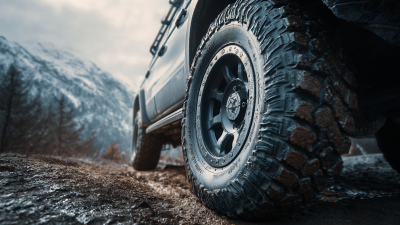
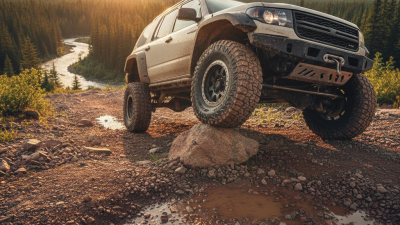
These tires must provide the right blend of performance, durability, and comfort. Consider the terrain you frequently encounter. Do you often find yourself on rocky paths or muddy trails? Knowing this can guide your decision. Tire tread patterns can affect traction significantly.
However, not every option is perfect. Sometimes, tires that excel in one area may underperform in another. A balance is key, yet achieving it may prove challenging. Evaluate your priorities. Efficiency, off-road capability, and noise levels matter. Ultimately, the choice can impact safety and comfort during travel. Invest time to find the best all terrain tires for your vehicle.
Understanding All Terrain Tires and Their Benefits
All-terrain tires are designed for versatility. They excel on various terrains, including mud, gravel, and paved roads. In a recent report, it was highlighted that around 50% of vehicle owners mistakenly use street tires for off-road adventures. This can lead to increased wear or potential accidents. Choosing the right all-terrain tire can significantly enhance both performance and safety.
The benefits of all-terrain tires are substantial. They often feature deeper treads, which provide better traction on uneven surfaces. A study indicated that vehicles with all-terrain tires have a 30% better grip on wet and slippery conditions. This is crucial for drivers who venture out in diverse weather. However, it's important to acknowledge that these tires can be noisier on highways. Some drivers also report lower fuel efficiency compared to standard tires. It's worth considering these trade-offs when making a choice.
Understanding how these tires function is key. All-terrain tires balance off-road capability with on-road comfort. They use a tougher rubber compound, extending their life span. Research shows that these tires generally last 10-20% longer than regular tires under similar conditions. Yet, not all all-terrain tires provide equal performance. Evaluating tread design, rubber quality, and load ratings can lead to better choices.
Key Factors to Consider When Selecting All Terrain Tires
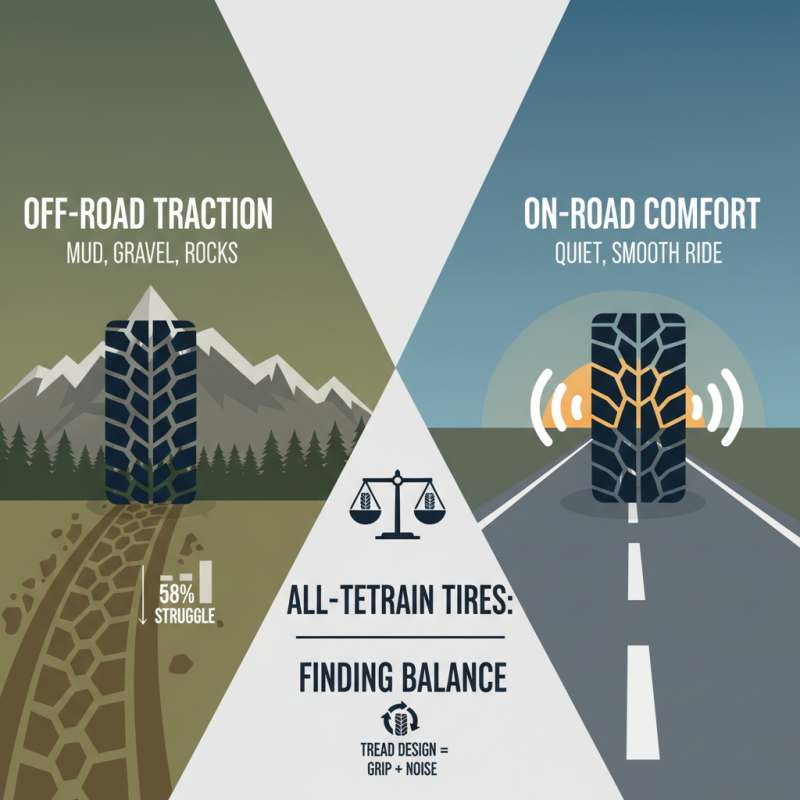
When selecting all terrain tires, understanding key factors is crucial for optimal performance. A recent study indicates that 58% of off-road enthusiasts struggle with traction due to improper tire choice. Tire tread design plays a vital role. An aggressive tread pattern often enhances grip on uneven surfaces, like mud and gravel. However, it may lead to a noisy ride on highways. Balancing these features can be challenging, as many users desire both on-road comfort and off-road capability.
Additionally, consider the tire's load capacity. According to industry standards, all terrain tires are rated for specific weights. Choosing a tire that can withstand the weight of your vehicle and any additional payload is essential. Many users overlook this aspect, leading to premature tire wear or blowouts. Pay attention to the sidewall markings for these ratings.
Lastly, tread life is another point of concern. Reports show that while some all terrain tires can last 40,000 miles, others may wear out faster under heavy use. Regularly rotating your tires can extend their life, yet many drivers neglect this maintenance. Reflect on your driving habits and the environments you encounter. This self-assessment is key to selecting the best all terrain tires for your needs.
Comparing Traction, Durability, and Performance Ratings
When choosing all terrain tires, traction is a primary factor. Good traction ensures grip on various surfaces. According to industry studies, tires with deeper treads offer better performance in muddy or loose conditions. Measurements indicate that tires with at least 15/32 inch tread depth enhance off-road capability. However, deeper treads can lead to increased noise on paved roads, a trade-off many drivers must consider.
Durability also plays a vital role in tire selection. Tires designed for off-road use typically have reinforced sidewalls. A recent report shows that these tires can withstand punctures 30% better than standard tires. Still, they may not perform well in fuel efficiency. This needs careful thought. Performance ratings from user reviews and tests are essential for making informed choices. Some studies reveal that a tire's performance can decline significantly after 30,000 miles. Regular monitoring can help avoid issues before they arise.
Ultimately, balancing these elements is crucial. Finding tires that excel in traction yet are durable can be challenging. Many drivers face this dilemma. Not all tires fit every terrain perfectly. Assess your driving habits, and consult reliable data and user feedback. Making a choice is not always straightforward.
How to Choose the Best All Terrain Tires for Your Vehicle? - Comparing Traction, Durability, and Performance Ratings
| Tire Model |
Traction Rating (Wet/Dry) |
Durability Rating (miles) |
Performance Rating (out of 10) |
| All Terrain Tire A |
A/A |
60,000 |
9.0 |
| All Terrain Tire B |
B/B |
50,000 |
8.5 |
| All Terrain Tire C |
A/B |
70,000 |
8.0 |
| All Terrain Tire D |
C/A |
45,000 |
7.5 |
| All Terrain Tire E |
B/C |
55,000 |
8.2 |
Budget Considerations: Finding the Best Value for All Terrain Tires
Choosing the right all-terrain tires can be a daunting task, especially when considering your budget. It’s essential to balance quality with affordability. Many tires might look appealing but can come with high prices that don’t always match their performance. Research is crucial. Look for online reviews and tire comparisons to get a sense of what fits your needs and budget.
Tips: Pay attention to the tread depth and tire design. These factors impact traction and durability. Higher tread depth often means better off-road performance. However, this can also raise costs. So, weigh your options carefully.
You may find good quality tires at lower prices. Consider purchasing from smaller retailers or online stores during sales seasons. Check for promotions or discounts. That's another great way to stretch your budget. Sometimes, it’s worth risking a little to step outside mainstream options. Remember, the goal is to ensure your chosen tires meet your vehicle's demands. Reflect on what aspects of performance mean the most for your driving needs.
Average Pricing of All Terrain Tires by Tread Life