Best All Terrain Tires for Every Adventure?
When it comes to off-road adventures, choosing the right all terrain tires is crucial. These tires are designed to handle various surfaces, from rocky paths to muddy trails. The right set can significantly enhance your vehicle's performance and safety.
Imagine navigating through a challenging landscape. The right all terrain tires provide the grip you need. They help you tackle uncertainties on your journey. However, not all tires are created equal. Some may excel in mud while lacking in rocky conditions. This inconsistency can lead to frustrating experiences.
Selecting the best all terrain tires requires careful consideration. Factors like tread design, rubber composition, and durability play a major role. Every adventure is unique, and so are the challenges that come with it. Understanding your needs is essential. Investing in quality tires can make a difference between a thrilling ride and a stalled one.
Understanding All-Terrain Tires: Types and Features
When choosing all-terrain tires, understanding their types and features is crucial. All-terrain tires are versatile. They balance on-road comfort with off-road capability. There are different tread patterns, each serving unique needs. Mud tires excel in loose, slippery terrain, while all-season types thrive on highways.
Consider your common driving environment. Urban settings may not require aggressive treads. However, if you frequent rugged trails, opt for tires with deeper, more aggressive patterns. These patterns channel mud and water effectively. Remember, tire noise increases with more aggressive tread designs. It's a trade-off.
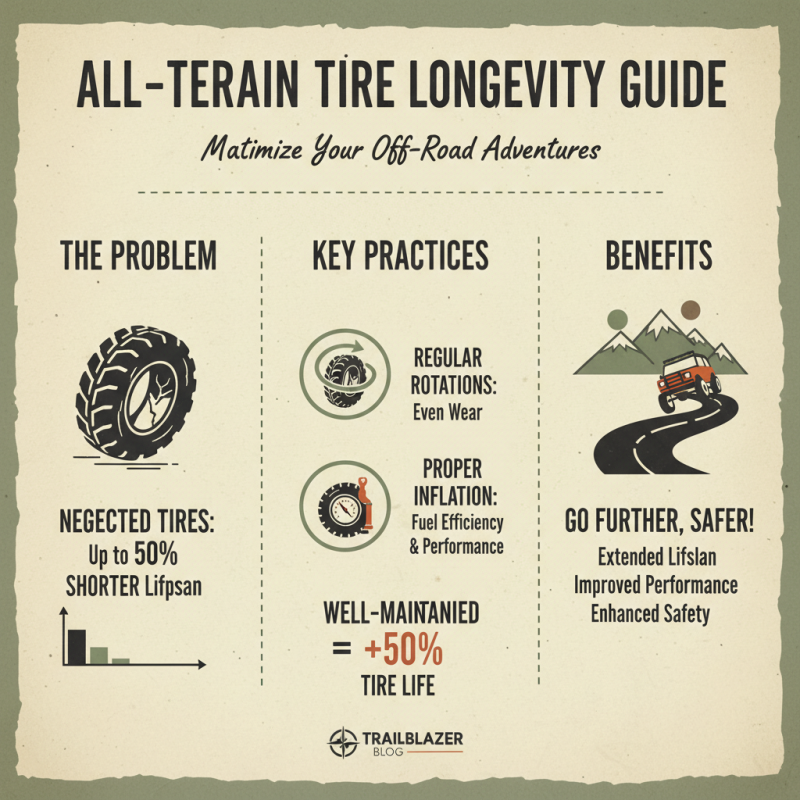
**Tip:** Always check tire pressure before a trip. Proper inflation aids performance and safety.
Tire sidewalls are another factor. Stiffer sidewalls improve puncture resistance. They provide stability on rocky paths but may lack grip in softer terrains. Be mindful of this balance.
**Tip:** Rotate your tires regularly. It extends their lifespan and enhances performance. Regular maintenance keeps you safe on different terrains. Your choice of tires should complement your lifestyle and adventures.
Best All Terrain Tires Performance Comparison
Factors to Consider When Choosing All-Terrain Tires
Choosing the right all-terrain tires can significantly enhance your off-road experience. Consider the tread design. A more aggressive tread pattern improves grip on uneven surfaces. According to a recent industry report, tires with a deeper tread depth can offer up to 15% better traction on mud and loose sand. This factor is vital in rugged conditions.
Next, assess the size and load capacity. Many vehicles may not accommodate oversized tires. An incorrect size can result in poor handling and reduced performance. Research shows that under-inflated tires, especially in all-terrain applications, can decrease fuel efficiency by as much as 10%. Always verify compatibility with your vehicle specifications.
Lastly, think about durability and puncture resistance. Some tires are designed with reinforced sidewalls to withstand sharp rocks and other hazards. It’s reported that tires with higher tensile strength reduce the likelihood of blowouts in demanding conditions. However, it is also essential to weigh these features against potential noise levels on paved roads. A balance between ruggedness and comfort is necessary for any adventure.
Top Brands for All-Terrain Tires: A Comparative Overview
When choosing all-terrain tires, several reputable brands stand out. These brands offer diverse options tailored for various driving conditions. Understanding their differences can guide consumers in making informed choices.
Some tire models excel in wet traction, while others may shine in rocky terrains. It's essential to consider weather adaptability and tread design. Some tires may perform exceptionally well in one condition yet struggle in another. On the other hand, tread noise can be an overlooked aspect for daily drivers. Many drivers find it frustrating when tires produce excessive noise on highways.
Lastly, tread life varies significantly across brands. Some tires wear down quickly, while others last much longer. This discrepancy often leads to reflections on costs versus performance. A high initial investment in durable tires may save money over time. However, balancing upfront costs with long-term benefits remains a challenge.
Best All Terrain Tires for Every Adventure
| Tire Type |
Tread Design |
Durability |
Performance on Mud |
Performance on Snow |
Price Range |
| All-Terrain |
Symmetrical |
High |
Good |
Fair |
$150 - $200 |
| Mud-Terrain |
Aggressive |
Medium |
Excellent |
Poor |
$180 - $250 |
| Sand Terrain |
Flat and Wide |
Low |
Good |
Fair |
$160 - $220 |
| Rocky Terrain |
Reinforced |
Very High |
Good |
Fair |
$200 - $300 |
Best All-Terrain Tires for Different Vehicles and Conditions
When choosing all-terrain tires, consider your vehicle type and the conditions you'll face. Smaller SUVs and crossovers may need tires that balance comfort and capability. These tires should handle light off-road use while providing a smooth ride on highways. For trucks and larger SUVs, you might require more rugged options that excel in challenging terrains. Think about deep mud, rocky paths, and snowy conditions when selecting.
Tip: Check the tread pattern. A more aggressive pattern may improve grip on uneven surfaces. However, it might create more road noise. Weigh the benefits and drawbacks for your situation.
In wet conditions, some tires can struggle. Look for those with good water evacuation features. They help prevent hydroplaning and enhance safety. Make sure to evaluate how often you drive in rain or snow.
Tip: Keep an eye on wear patterns. Uneven wear may indicate alignment issues or improper inflation. Regular inspection can save you from future headaches. Every detail counts when it comes to your adventures.