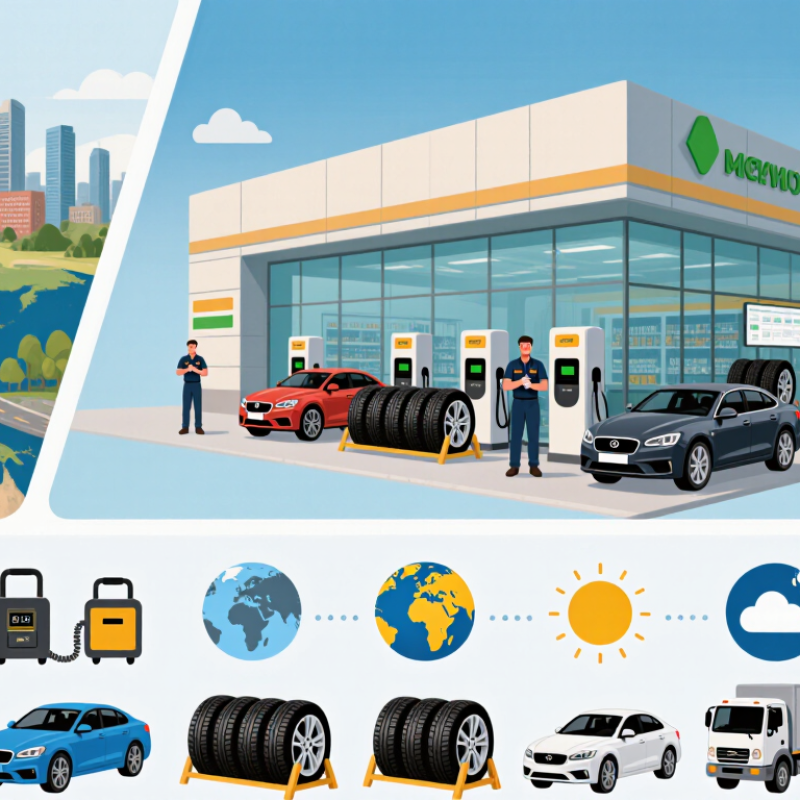
The 2026 best tire center for global buyers will not be a single building type. It will be a flexible, hybrid service model. Customers may discover products online, compare total ownership costs, and complete fitting at a local workshop. That journey matters because tire purchases remain highly practical and safety-sensitive.
The Global Tire Market Report by Fortune Business Insights estimates continued market growth through 2032. The International Energy Agency’s Global EV Outlook 2025 also reports that electric car sales exceeded 17 million worldwide in 2024. These figures create new demands. A modern tire center needs EV-compatible equipment, trained technicians, digital inventory, and reliable regional supply. It should also handle wheel alignment, tire-pressure systems, seasonal changes, and fleet maintenance. Simple, but not easy.
Florent Menegaux, Michelin’s chief executive, has stated, “The tire is the only point of contact between the vehicle and the road.” That principle places technical competence above showroom appearance. For global buyers, a hybrid tire center may offer the strongest balance between online convenience and physical trust. Yet this answer is not universal. Rural markets may prefer independent workshops, while dense cities may favor compact service hubs and mobile fitting. Data from different reports also uses different market definitions. Comparisons can therefore mislead. The best format depends on climate, vehicle types, road conditions, labor skills, and customer expectations. This guide examines those variables before naming the most practical tire center model for 2026.
What Is the 2026 Best Tire Center Type for Global Buyers?
Global Tire Center Models: Retail, Wholesale, Online, and Hybrid Explained
The best tire center model in 2026 depends on purchase volume, service needs, and delivery distance. Retail centers suit drivers who need fitting, balancing, and immediate guidance. Buyers can inspect tread patterns, sidewall markings, and storage conditions before installation. This physical experience still matters when road conditions differ between regions.
Wholesale centers work better for distributors, fleets, and repair networks. They offer larger inventories, pallet pricing, and planned shipment schedules. However, buyers must confirm production dates, specifications, warranty procedures, and export documents. Online centers provide wider catalog access and easier price comparison. Yet digital listings may hide delivery delays or unsuitable vehicle fitment. A low price is not always a low total cost.
Tips: Ask for clear product specifications, current stock evidence, shipping terms, and return conditions. Compare landed cost, not just unit price. Hybrid centers combine online ordering with local fitting or inspection support. This model can reduce uncertainty, especially for overseas buyers. In practice, communication quality often decides success. A fast reply is useful, but a precise reply is better. The hybrid model is not perfect; scattered inventory and unclear responsibility can create frustrating delays. Buyers should test the process with a small order before scaling. Reliable centers explain limitations openly and document every important detail.
What Is the 2026 Best Tire Center Type for Global Buyers?
Replacement Tires Represent Over 70% of Demand, Industry Forecasts Show
Replacement tires are expected to represent over 70% of global demand in 2026, according to industry forecasts. This share reflects everyday driving, aging vehicle fleets, and uneven road conditions. Demand stays practical. Buyers usually need reliable fitment, quick availability, and clear technical advice.
For global buyers, a full-service tire center may offer the strongest balance. It can inspect tread depth, check wheel alignment, verify load ratings, and recommend suitable seasonal options. Experienced technicians also examine sidewall damage and irregular wear. These details matter because a tire can look acceptable while hiding internal stress. Digital inventory tools can reduce delays, but trained inspection remains essential.
A strong tire center should serve replacement needs before chasing unnecessary upgrades. It should publish accurate specifications, explain warranty limits, and follow local safety requirements. Transparent pricing builds trust across different markets. However, the “best” center is not identical everywhere. Climate, road quality, vehicle use, and import rules can change the right service model. Forecasts are useful, yet they are not perfect. Rural buyers may value stock depth, while urban buyers may prefer fast fitting appointments. Some centers still overemphasize performance products, even when customers need durable daily-use tires. That mismatch deserves closer review.
What Is the 2026 Best Tire Center Type for Global Buyers?
EV Growth Makes TPMS, Load Ratings, and Specialized Service Essential
The best tire center in 2026 is a service-focused facility, not merely a low-price tire seller. Electric vehicles are heavier because of their battery packs. Their tires need accurate load ratings, correct pressure, and suitable sidewall strength. A qualified technician should inspect the vehicle plate, tire markings, and wheel condition before installation. Small mistakes can affect braking, range, and handling.
TPMS service is equally important. Sensors may need testing, relearning, or replacement after a tire change. A reliable center uses diagnostic equipment and records the final pressure settings. In my experience, many customers check tread depth but ignore sensor warnings. That is an easy mistake. Regional roads, temperatures, and import specifications can also change the correct service approach. I once saw a vehicle fitted with tires that looked suitable but carried too little weight. The appearance was convincing, yet the rating was wrong.
Tips: Ask whether the center supports EVs. Confirm the tire’s load index and speed rating. Request a TPMS inspection after fitting. Check torque settings before leaving. Keep the service record for future repairs. If staff cannot explain these steps clearly, choose a better-equipped facility. Specialized service costs more sometimes. It can also prevent uneven wear, warning lights, and unsafe handling. There is no perfect center everywhere, so buyers should compare equipment, training, documentation, and local experience.
Global electric-car sales share increased from approximately 4% in 2020 to more than 20% in 2024. For global buyers in 2026, the strongest tire-center model combines EV-ready tire fitting, TPMS diagnosis and relearning, accurate load-rating selection, high-voltage safety awareness, and specialized service equipment.
Source: International Energy Agency, Global EV Outlook 2024. Figures are rounded global electric-car sales shares.
More than two billion tire units move through the global market each year. This scale makes center selection a logistics decision. For most international buyers, a regional full-service tire center offers the strongest balance. It can inspect, store, fit, balance, and document tires near major transport routes. That proximity reduces delivery delays and simplifies warranty evidence. Still, local needs matter.
Large importers may prefer a distribution-focused center with controlled inventory and rapid order processing. A high-throughput warehouse suits standardized orders, while a mobile service center supports remote fleets and construction sites. Specialty centers remain valuable for winter compounds, agricultural sizes, or technical consultation. Capacity must be visible. Ask for monthly handling data, technician certifications, equipment calibration records, and traceable inspection reports. Do not accept impressive claims without operating evidence.
Price can mislead global buyers. A cheap center may create port storage, rework, currency, and emergency freight costs. During supplier reviews, calculate landed cost per usable tire, not the invoice price. Also test communication with one urgent, realistic request. Response time reveals more than polished brochures. My early scoring models overvalued warehouse size and ignored forecasting discipline. That was a useful correction. A center that cannot explain its delays will eventually transfer them to the buyer.
What Is the 2026 Best Tire Center Type for Global Buyers?
Buyer Scorecard: Compare Price, Inventory, Certifications, and Warranty
For global buyers, the best tire center is not always the cheapest option. A reliable scorecard should separate unit price from freight, duties, fitting fees, and payment costs. Cheap is not cheap. Request a written quotation with tire size, load rating, production date, and delivery terms. A low price may hide older stock or expensive ocean freight.
Inventory deserves practical testing. Ask for live warehouse quantities, not a general catalog. Confirm how many matching units are available today. Mixed production dates can complicate fleet replacement. A useful supplier should explain restocking times and offer alternatives when a size disappears. I would also check response speed. Delayed answers can become costly during urgent replacement work.
Certifications must match the destination market and vehicle requirements. Ask for current test documents and confirm their scope with an independent technical source. Certificates without traceable details deserve caution. Warranty terms should state coverage, mileage limits, exclusions, claim evidence, and response times. Clarify whether the center handles transport for defective products. Some warranties sound generous but require difficult proof. That weakness is easy to miss. Keep purchase orders, photographs, installation records, and pressure checks. These details strengthen a fair claim and reveal whether the tire center operates professionally.
A practical comparison of common tire-service models for international procurement, fleet operators, distributors, and mobility businesses.
| Tire Center Type | Typical Price Position | Inventory Breadth | Certification & Compliance | Warranty Transparency | Installation Coverage | Best Global-Buyer Use Case | Overall Score out of 100 |
|---|---|---|---|---|---|---|---|
| Independent Multi-Brand Tire Center | Competitive Flexible labor and product pricing |
High for common passenger, SUV, light-truck, and commercial sizes; specialty stock varies by location | May include trained technicians, local trade licenses, recycling compliance, and manufacturer-required service procedures; verify documentation | Usually available, but coverage terms, road-hazard exclusions, and claim procedures differ considerably | Strong local access; cross-border support is usually limited unless a service network is arranged | Buyers seeking negotiation flexibility, mixed tire sizes, and personalized technical support | 86 |
| Authorized Dealer Network | Mid to premium Higher service consistency |
Strong fitment coverage for supported vehicle categories; less flexible for uncommon specifications | Typically stronger process controls, technician training, equipment standards, and documented installation procedures | Generally clear written policies with defined mileage, tread-depth, defect, and claim conditions | Good regional coverage; international consistency depends on network agreements and local authorization | Fleet and institutional buyers prioritizing traceability, standardized service, and documentation | 89 |
| Warehouse-Style Membership Tire Center | Low to mid Volume-based pricing |
Good availability for mainstream passenger and SUV sizes; limited selection for commercial and specialty applications | Usually follows internal service procedures and applicable local regulations; external certification depth may vary | Often standardized and easy to compare, but membership, prorating, and road-hazard conditions require review | Convenient in major markets; appointment availability and geographic reach can be restrictive | High-volume buyers of common sizes who prioritize predictable pricing and standardized policies | 82 |
| Online Tire Marketplace with Partner Fitting | Low to mid Easy price comparison |
Very broad catalog visibility; displayed stock may depend on supplier confirmation and delivery location | Product compliance documents may be available online; fitting quality depends on the selected partner facility | Policy language is often published, but returns, freight damage, fitting errors, and cross-border claims must be clarified | Broad ordering reach; physical installation quality and appointment capacity vary by partner | Price-sensitive buyers comfortable coordinating delivery, installation, taxes, and after-sales support | 80 |
| Mobile Tire Service | Mid to premium Convenience premium |
Usually narrower on-vehicle stock; products can be pre-ordered for scheduled appointments | Technician qualifications and mobile equipment standards vary; verify balancing, torque, lifting, and disposal procedures | Often simple for installation workmanship, but tire-defect and road-hazard coverage may be separate | Excellent for workplaces, depots, and fleets within the operating area; limited outside service zones | Fleets and commercial buyers that value reduced vehicle downtime and on-site installation | 78 |
| Commercial Fleet Tire Service Center | Mid to premium Best value at fleet scale |
Strong for truck, bus, trailer, and retread-related requirements; passenger-car selection may be narrower | Usually emphasizes fleet inspection records, torque control, safety procedures, commercial regulations, and technician training | Service-level agreements, casing policies, and mileage reporting can be detailed; confirm cross-border enforcement | Strong in established transport corridors; emergency and international coverage must be contracted separately | Transport companies and industrial fleets measuring uptime, total cost per kilometer, and inspection quality | 91 |
| Distributor-Linked Service Hub | Mid Efficient for repeat orders |
Broad regional access through warehouse networks; availability depends on import schedules and allocation | Documentation can include product conformity files, batch records, and trade compliance papers; installation standards vary by hub | Commercial terms may be strong for business buyers; consumer warranty handling should be confirmed in writing | Good for regional distribution and repeat procurement; last-mile installation is not always included | Importers, resellers, and multi-location buyers needing consolidated purchasing and regional replenishment | 87 |
Scoring is an indicative buyer framework based on typical operating characteristics of each service model, not a quotation or ranking of any specific company. Actual pricing, inventory, certifications, warranty terms, and service coverage vary by country, facility, tire category, and contract.